
Preparing Your Digital Marketing Strategy for 2026
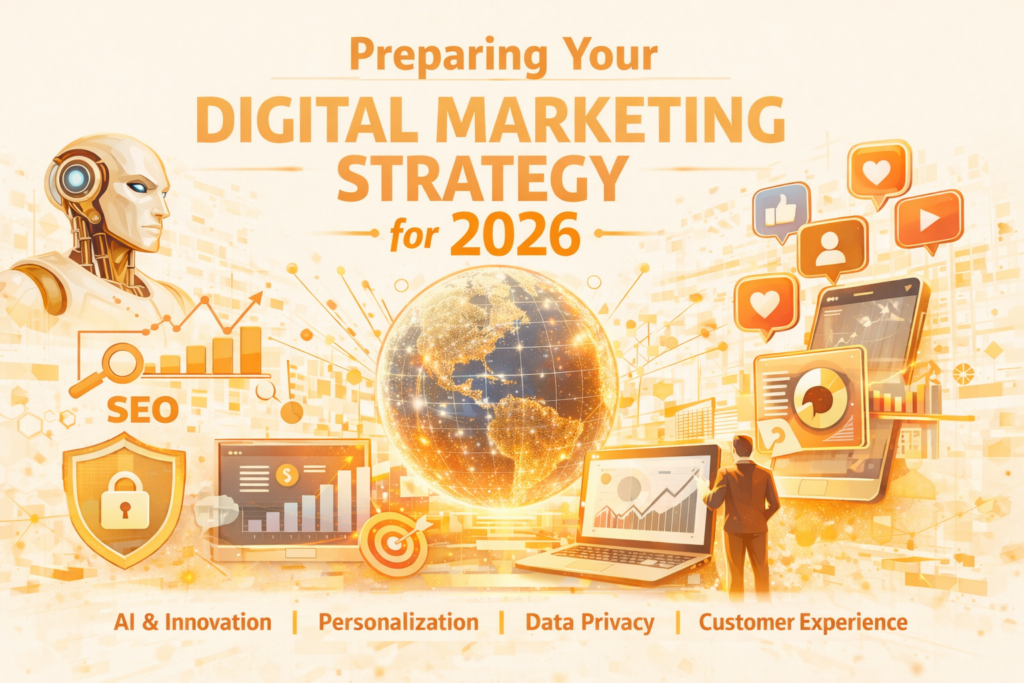
Digital marketing is undergoing one of its most transformative phases. As we move toward 2026, rapid advancements in artificial intelligence, changing search engine algorithms, evolving social media platforms, and stricter data privacy regulations are redefining how businesses connect with their audiences. Brands that proactively adapt to these changes will gain a strong competitive advantage, while those that fail to evolve risk losing relevance.
Preparing your digital marketing strategy for 2026 is not just about adopting new tools—it’s about building a future-ready mindset that focuses on customer experience, trust, personalization, and data-driven decision-making.
The Growing Role of Artificial Intelligence
Artificial Intelligence (AI) is set to become the backbone of digital marketing strategies in 2026. From content creation and ad targeting to customer support and analytics, AI-powered tools are helping marketers work smarter and faster.
AI can analyze massive amounts of data to identify patterns, predict customer behavior, and personalize marketing campaigns at scale. Chatbots and virtual assistants will continue to improve, providing instant, human-like responses and enhancing customer satisfaction. However, while AI boosts efficiency, human creativity and strategic thinking will remain essential. The most successful brands will be those that use AI as a support system rather than a replacement for human insight
SEO Evolution: From Keywords to User Experienc
Search Engine Optimization is no longer about ranking for a few keywords. In 2026, SEO will revolve around user intent, experience, and authority. Search engines are prioritizing content that demonstrates real expertise, trustworthiness, and usefulness.
To prepare, marketers must focus on creating high-quality, experience-driven content that answers real user questions. Website performance, mobile optimization, page speed, and intuitive navigation will play a crucial role in rankings. Voice search and conversational queries are also increasing, making natural language optimization more important than ever. Building topical authority and consistently publishing valuable content will be key to long-term SEO success.
Content Marketing with Purpose
Content saturation is a growing challenge. In 2026, brands must shift from producing high volumes of content to creating meaningful and purposeful content. Educational blogs, case studies, storytelling-based posts, and interactive content will outperform generic promotional material.
Short-form content will capture attention, while long-form content will build authority and trust. Repurposing content across multiple platforms—blogs, videos, social media posts, and email campaigns—will help maximize reach while maintaining consistency. Authenticity will be critical; audiences can easily recognize content created purely for sales rather than value
The Dominance of Video Marketing
Video marketing will continue to dominate digital channels in 2026. Short-form videos on platforms like Instagram Reels, YouTube Shorts, and TikTok will remain powerful tools for engagement, discovery, and brand awareness.
Live videos, tutorials, behind-the-scenes content, and user-generated videos will help brands build stronger emotional connections with their audiences. Businesses should adopt a video-first mindset and invest in simple, authentic video content rather than overly polished productions. Videos that educate, entertain, or solve problems will consistently perform better than purely promotional ones.
Privacy-First and First-Party Data Strategies
With the decline of third-party cookies and increasing privacy regulations, digital marketers must rethink how they collect and use data. In 2026, trust will be one of the most valuable marketing assets.
Brands should focus on building first-party data through email subscriptions, loyalty programs, and community engagement. Transparency in data usage and clear communication about privacy policies will help strengthen customer relationships. Ethical data practices will not only ensure compliance but also enhance brand credibility and long-term loyalty.
Personalization as a Standard Expectation
Personalization will no longer be a competitive advantage—it will be a basic expectation. Consumers want brands to understand their needs, preferences, and behaviors.
In 2026, personalization will go beyond using a customer’s name in an email. Dynamic website content, personalized product recommendations, behavior-based email campaigns, and targeted ads will become standard practices. Advanced analytics and AI will help marketers deliver personalized experiences at every stage of the customer journey, increasing engagement and conversion rates.
Omnichannel Marketing for Seamless Experiences
Consumers interact with brands across multiple touchpoints before making a purchase. A strong omnichannel strategy ensures a consistent and seamless brand experience across websites, social media, email, paid ads, and messaging platforms like WhatsApp.
In 2026, successful brands will integrate all marketing channels into a unified strategy. Consistent messaging, branding, and customer experience across platforms will build trust and improve retention. Businesses must focus on being present where their audience is and delivering a smooth journey across all channels.
Data-Driven Decision Making
Guesswork will have no place in digital marketing strategies for 2026. Data-driven decision-making will be critical for optimizing campaigns and maximizing ROI.
Marketers should track key performance indicators such as conversion rates, engagement metrics, customer lifetime value, and return on investment. Tools like GA4, marketing dashboards, heatmaps, and CRM systems will help analyze performance and identify opportunities for improvement. The ability to turn data into actionable insights will separate successful marketers from the rest
Preparing for Continuous Change
One of the most important aspects of preparing for 2026 is accepting that digital marketing will continue to evolve. Algorithms will change, platforms will rise and fall, and consumer behavior will shift. Brands must remain agile, open to learning, and willing to experiment.
Continuous skill development, testing new strategies, and staying updated with industry trends will be essential. Businesses that view digital marketing as an ongoing process rather than a one-time effort will be better positioned for long-term success.
Conclusion
Preparing your digital marketing strategy for 2026 requires a forward-thinking approach that balances technology with human connection. By embracing AI, focusing on user experience, prioritizing privacy, delivering personalized content, and making data-driven decisions, businesses can build resilient and effective marketing strategies.
The future of digital marketing belongs to brands that adapt early, stay authentic, and put their audience at the center of every decision. Starting today will ensure you’re not just ready for 2026—but leading the way.